
-
2014Working in European tolling since
-
30+Platforms launched
-
25+Countries driven
-
30,000+Km on the road
I co-founded Maut & Vignette B.V. back in 2014 together with Freek Jurg. Based at our main office in Amersfoort, the Netherlands, I serve as CEO and focus on the overall strategic direction of the company, including which markets, routes, and services we expand into next. I also spend a lot of time on the road myself, testing and verifying major transit routes across Europe. My most recent trip to Hungary was in April 2026.
As an independent service provider, our aim is to make cross-border driving easier through a network of platforms covering more than 15 countries and supporting over 22 languages.
How a fine in Hungary led to Maut & Vignette
My path to European tolling started on the road, out of personal frustration rather than from behind a desk.
Back in 2008, I was driving through Hungary in a rental car. I assumed the rental company had taken care of all the necessary road permits, but I was wrong. I ended up receiving a steep fine because the car didn't have the physical motorway sticker required at the time.
A few years later, I ran into a similar problem when trying to work out how to get a German green emissions sticker before driving into Wiesbaden to visit family. The process was confusing, poorly explained for non-local drivers, and more stressful than it needed to be.
When Hungary expanded its digital e-Matrica registration system in 2014, Freek and I saw an opportunity to make the process easier. We built an independent, simple-to-use service that allowed international drivers to register their number plates in their own language and better understand the rules before setting off.
How we try to help drivers avoid costly mistakes
Over the years, growing the company and analysing customer feedback has shown me exactly where international drivers tend to run into problems with Hungary's e-Matrica system. Because enforcement is largely automated through overhead camera gantries operated by NÚSZ (Nemzeti Útdíjszolgáltató Zrt.), even tiny registration mistakes can lead to headaches and unexpected fines.
Some of the most common issues we help drivers avoid include:
- Vehicle Classification Errors: Selecting Category D1 instead of D2 is one of the most common mistakes. D1 generally applies to standard passenger cars up to 7 seats / 3.5 tonnes, while larger vans, minibuses, and motorhomes fall under D2. If the wrong category is selected, the vehicle won't be considered correctly registered and an automatic fine will be triggered when the driver passes under official enforcement gantries. Personally I can't understand why, as the D2 vignette is much more expensive than the D1.
- Trailer Rules (Category U): If you are towing a trailer with a D2 vehicle, the trailer may require its own separate Category U e-vignette.
- Number Plate Typos: Because toll checks rely on automatic number plate recognition, a single wrong letter, digit, or country code will flag your vehicle as unregistered.
Our platform is designed to reduce the risk of these mistakes during registration, so you can travel without worrying about administrative fines arriving weeks later. And mark my words: in Hungary, fines are issued for every single day you drive without a valid vignette, so the costs can add up fast!
What I learned from driving in Hungary
I strongly believe that running a travel-focused company requires first-hand experience. I regularly drive the major transit routes across Central, Western and Southern Europe to see how the motorway systems work in practice.
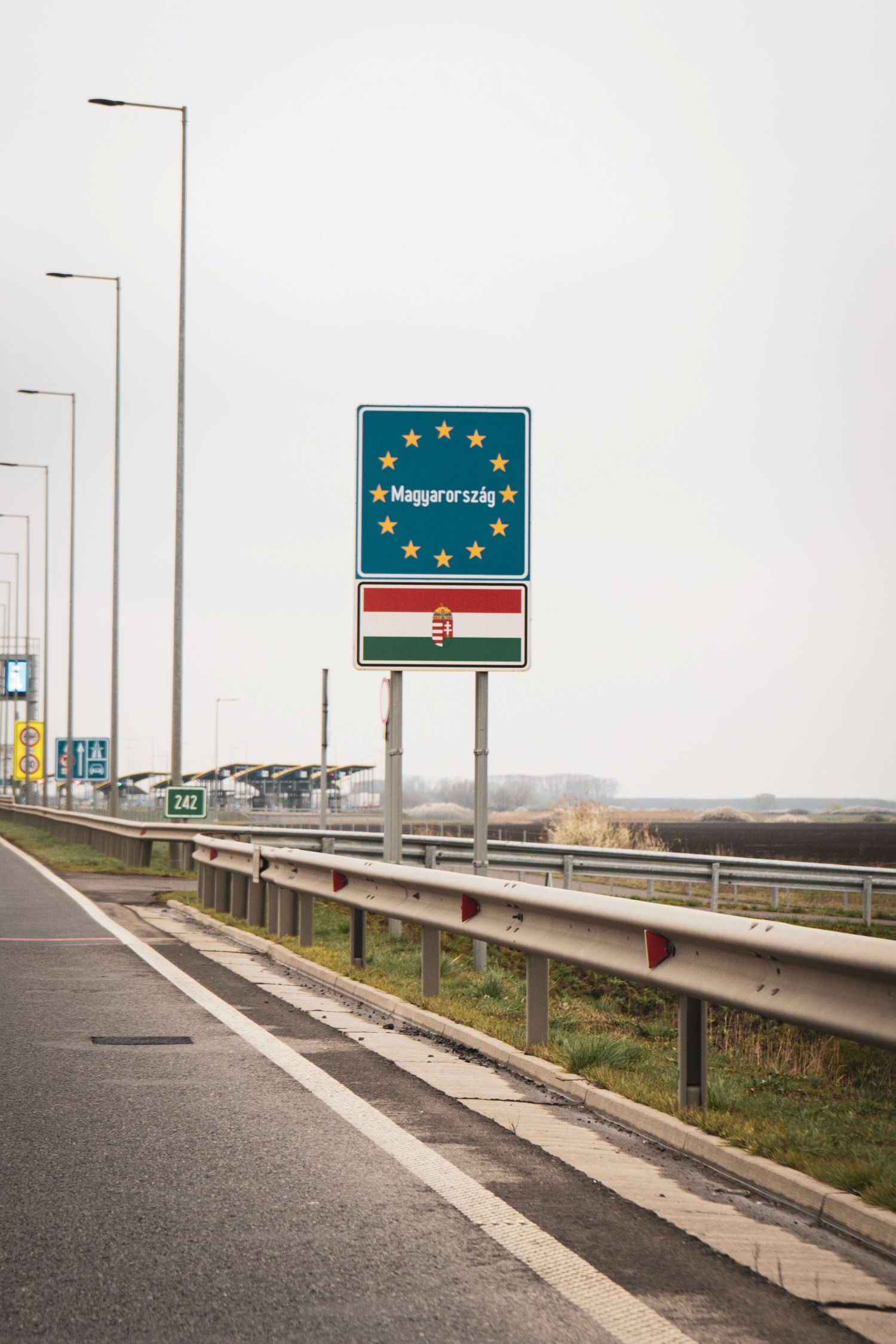
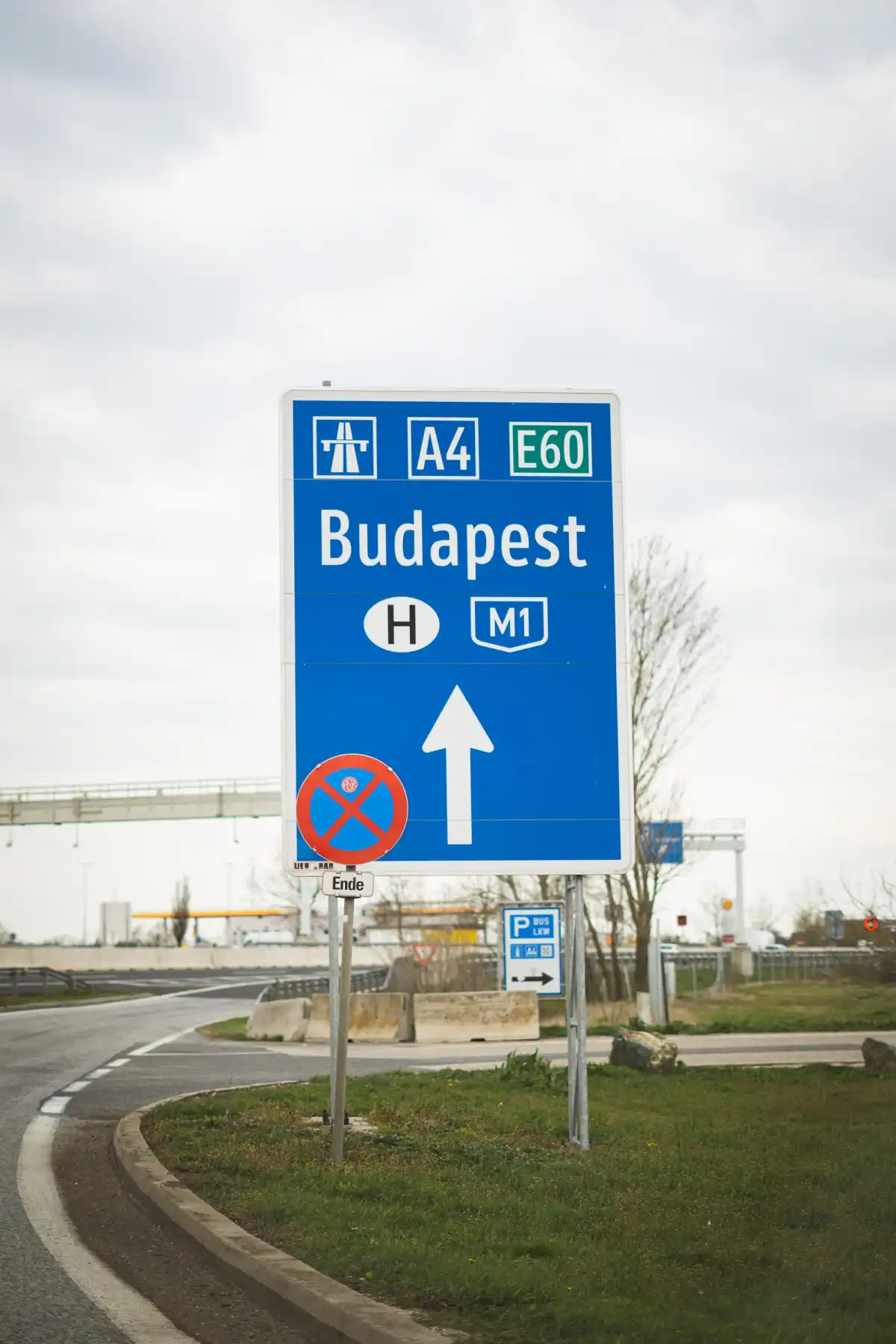
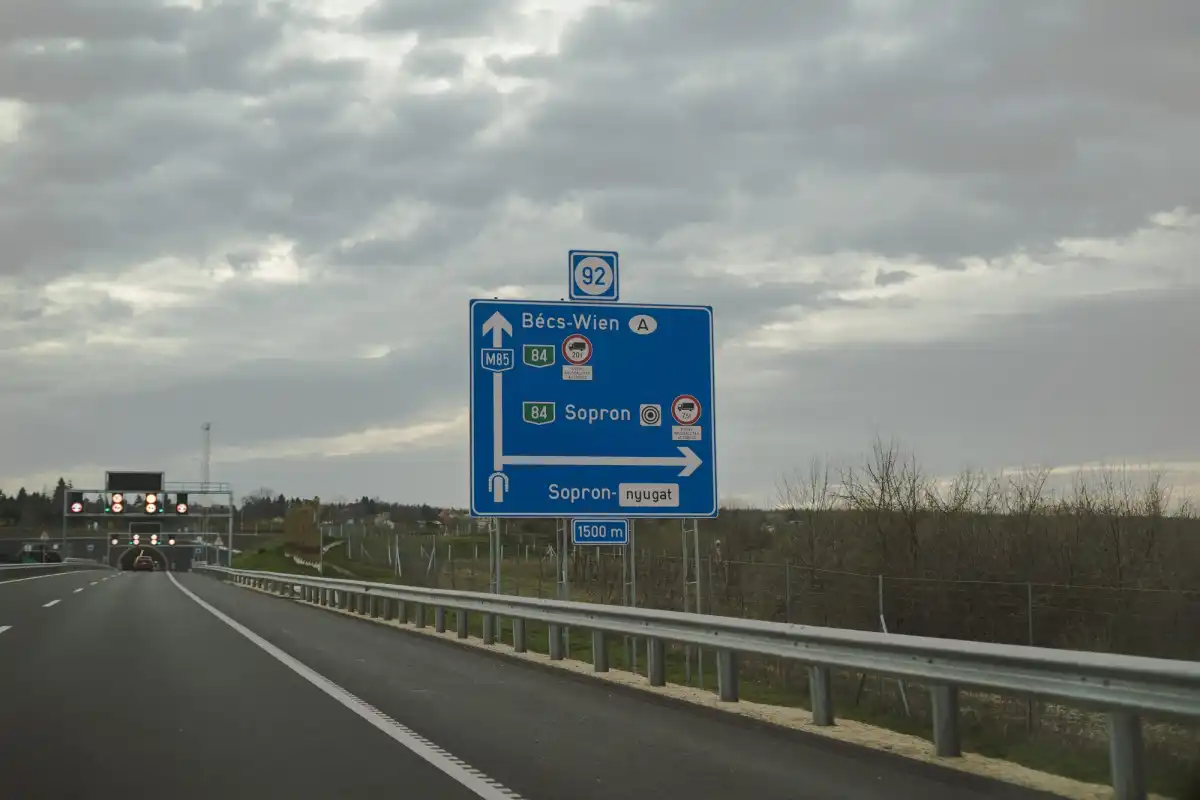
During a route verification trip across Hungary in April 2026 with our photographer Ujjawal Verma, we recorded several useful observations:
- M1 Motorway (Hegyeshalom / Austrian Border): When entering Hungary from Austria towards Budapest, toll enforcement camera gantries appear shortly after the border. And although there are no permanent Schengen border controls, mobile police units frequently monitor incoming traffic. For these reasons, it's best to make sure your e-Matrica is valid before entering the motorway network.
- M85 Motorway (Sopron / Austrian Border): When the main M1 route backs up with heavy holiday traffic, the M85 can be a quieter alternative. The motorway section ends near Sopron, after which drivers can continue on regional roads toward the Austrian border.
- M43 Motorway (Szeged to Nagylak): This 57 km stretch towards Romania carries a large amount of freight traffic. We noticed that speed limits drop abruptly to 40 km/h as you approach the border crossing. If you continue onto Romania's A1 motorway towards Arad, remember that you will need a separate Romanian rovinieta.
How does my experience help you?
I know how easy it is to get Hungarian toll rules wrong because I made that mistake myself back in 2008. Since then, I've driven tens of thousands of kilometres across Europe by car and in my family's camper. That experience has given me a practical understanding of how different European toll systems work, how vehicle categories vary from country to country, and where drivers are most likely to make mistakes.
When you’ve actually driven these routes yourself, you start to notice the small details that official websites don’t always explain clearly. Based on my test roads in Hungary also help me understand how the e-Matrica system works in real-world conditions, not just how it’s described in official documentation. I know where the camera gantries are located, what the quality of the roads are, how the speeding limits are controlled and that the 60 minutes grace period doesn't work in practice.
I personally write some of our content and review most of it before publication. I cross-check information against official resources and combine that with our own experience on the road, with the aim of making our guides as accurate, practical, and useful as possible.
That experience helps us give drivers clearer advice and reduce the risk of avoidable toll mistakes and fines.