
Complete Guide for Driving in Hungary - Latest 2026 update

Mattijs Wijnmalen
CEO and co-founder
Quick Answer
Hungary drives on the right, with a 130 km/h motorway limit, zero alcohol tolerance (0.00% BAC), and dipped headlights required outside towns at all times. Foreign drivers must have their driving licence, passport or ID card, vehicle registration document and proof of insurance with them. A valid e-Matrica is mandatory on every M-road, and a warning triangle and first aid kit must be carried in the car.
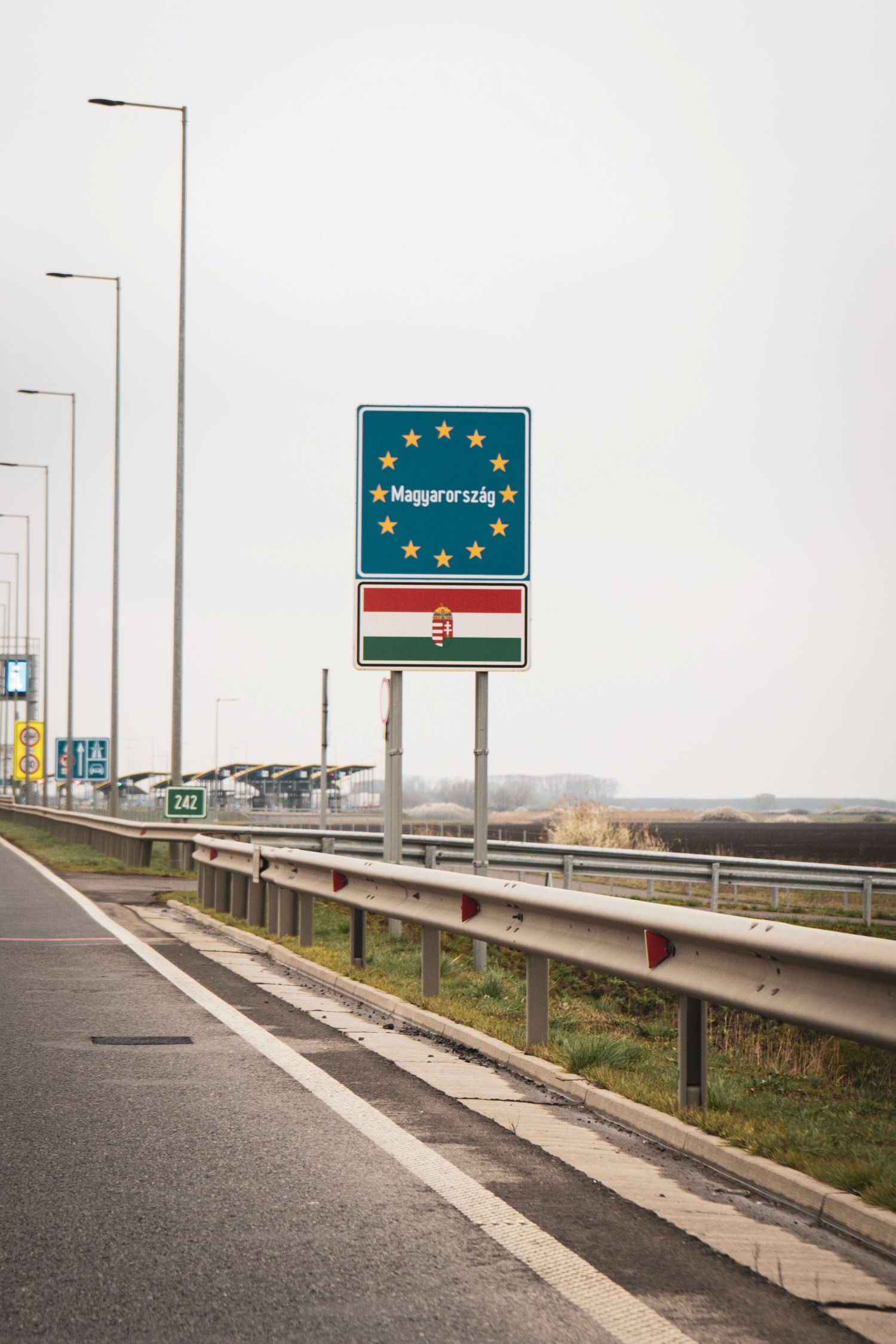
Hungary recorded 52 road fatalities per million inhabitants in 2024, well above the EU average of 44, according to Eurostat. Driving in Hungary comes with its own set of rules, and getting them wrong can turn a quick motorway transit into an expensive one. This guide covers what you need whether you are heading in from Germany, Austria, Croatia, Italy or Switzerland: documents, speed limits, safety equipment, Hungary's zero-tolerance alcohol law, and the e-Matrica system. Our team drove the M1, M5 and M7 corridors, including the Hegyeshalom border crossing, in April 2026 to check the details firsthand.
What Documents Do You Need to Drive in Hungary?
You need four things: a valid driving licence, your vehicle's registration document, proof of insurance, and personal ID or a passport. Hungarian police can ask for all four at any roadside check; add the rental agreement too if you are driving a hired car.
EU or EEA licence holders need nothing further. Non-EU and non-UK visitors sometimes need one extra document, covered below.
Hungary's own minimum driving age is 17, per Police.hu, but foreign visitors are governed by their home licence's age rules instead, so this rarely matters in practice.
Do I Need a UK Sticker in Hungary?
UK-registered vehicles need a 'UK' identifier displayed when driving in Hungary; the old oval 'GB' badge is no longer valid on its own. If your plate already shows 'UK' with the Union Flag, no separate sticker is needed. If it only shows the registration number, or still shows 'GB', add a UK sticker to the rear before you travel.
What driving licence do I need in Hungary in 2026?
EU, EEA and UK photocard licences are valid in Hungary on their own, while an older UK paper licence or a licence issued outside the EU and UK should be carried together with a 1968-convention International Driving Permit (IDP). Digital or app-based licences are not accepted for foreign drivers, as Hungarian police can only check Hungarian-issued licences electronically, so always carry the physical card.
Do I Need an International Driving Permit (IDP)?
EU/EEA and UK photocard licences do not need an IDP. An older UK paper licence needs a 1968-convention IDP alongside it, per current Police.hu guidance. Visitors from outside the EU and UK should carry an IDP as a precaution.
Vehicle Insurance: Do I Need a Green Card?
No. Hungary is part of the Green Card System, but a standard EU or UK insurance certificate is enough on its own. Keep it in the car, and confirm with your insurer that your policy covers driving in Hungary.
Speed Limits in Hungary
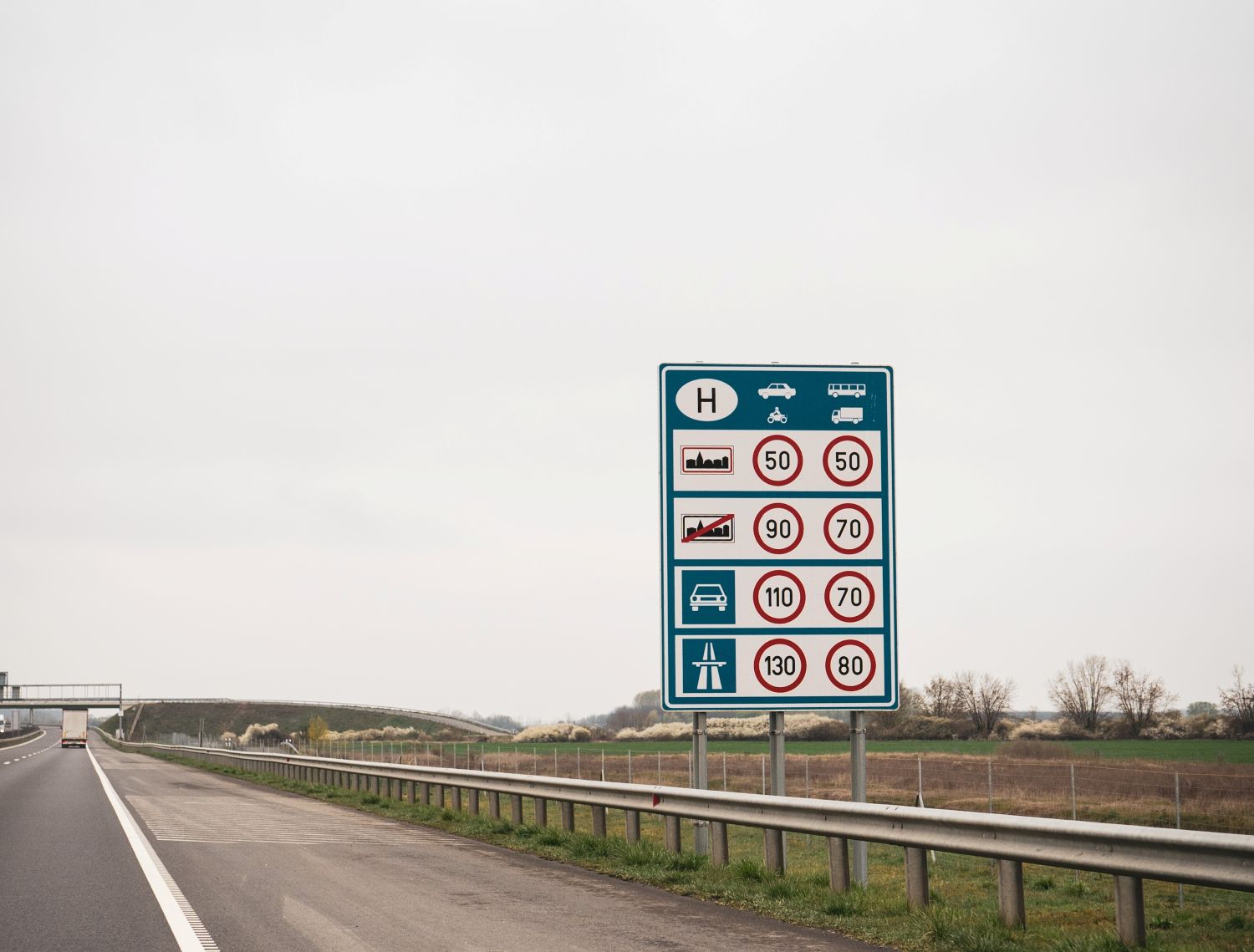
Hungary's speed limits are set by road type and enforced strictly:
- Motorway (autópálya): 130 km/h
- Expressway: 110 km/h
- Outside built-up areas: 90 km/h
- Built-up areas: 50 km/h (30 km/h increasingly common in town centres)
- With snow chains fitted: 50 km/h maximum
Limits can change more than once within the same stretch of road, so treat the signs as the final word. Figures confirmed on Police.hu.
| Road type | Hungary | Germany | Austria | Croatia | Italy / Switzerland |
|---|---|---|---|---|---|
| Motorway | 130 km/h | No general limit (130 advisory) | 130 km/h | 130 km/h | 130 / 120 km/h |
| Outside built-up areas | 90 km/h | 100 km/h | 100 km/h | 90 km/h | 90 / 80 km/h |
| Built-up areas | 50 km/h | 50 km/h | 50 km/h | 50 km/h | 50 km/h |
Speed Cameras and Fines
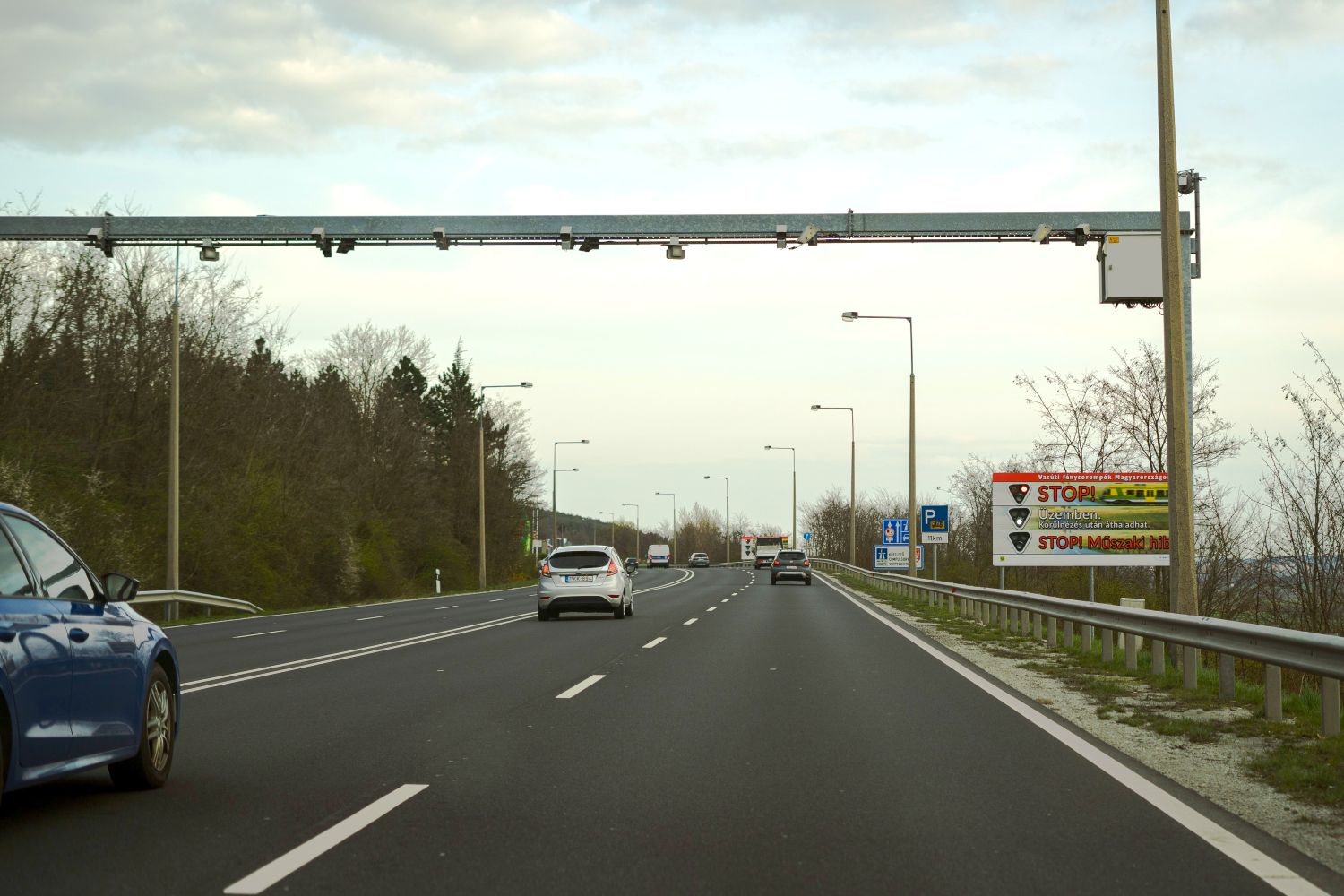
Hungary uses NÚSz average-speed cameras on several motorway sections alongside ordinary fixed and mobile units, and both on-the-spot and by-post fines are common. As of 2026, Hungarian speeding fines are tiered by how far over the limit you were caught, running from around 50,000 HUF up to 468,000 HUF for the most serious violations, per Police.hu (verified July 2026). Radar detectors are illegal to carry at all.
Drink-Driving Law: Zero Tolerance
Hungary applies a genuine 0.00% blood alcohol limit to every driver, confirmed on Police.hu, with no small-amount allowance. Even a single glass of wine the night before can leave you over the limit the next morning. Penalties range from fines to licence confiscation to prison for serious cases.
The rule is actively enforced. Hungarian police run week-long nationwide checks targeting drink- and drug-driving every June and December, as part of the European ROADPOL road-policing operations (Source: Police.hu).
Mandatory Equipment: What to Carry in Your Car
Three items are legally required, per the Hungarian Road Code (KRESZ) and Police.hu: a warning triangle, a first aid kit, and a high-visibility vest kept within reach of the driver's seat, not in the boot. A fire extinguisher is not required for standard passenger cars, though sensible to carry. Headlamp beam converters are required if your headlights cannot be manually adjusted for driving on the right, since unconverted lights dazzle oncoming traffic. A spare bulb kit is recommended, not mandatory.
| Item | Status |
|---|---|
| Warning triangle | Mandatory |
| First aid kit | Mandatory |
| Hi-vis vest, within reach of the driver's seat | Mandatory |
| Headlamp converters, if headlights aren't adjustable | Mandatory |
| Spare bulb kit | Recommended |
| Fire extinguisher | Recommended, not mandatory |
Rules of the Road in Hungary
Hungary drives on the right, overtaking on the left. At uncontrolled junctions, priority goes to traffic from the right (the jobbkéz szabály), so treat every unmarked junction with caution. Buses and emergency vehicles always have priority, and turning right on red is never permitted. Seatbelts are compulsory for everyone, front and back. Horn use is restricted to genuine danger in built-up areas, though permitted more freely outside town. Handheld phone use is illegal; hands-free is fine. Motorcyclists and passengers must wear a helmet. A recent addition worth knowing: the zipper merge (cipzár-módszer) is now mandatory where a lane ends, meaning drivers take turns merging one at a time rather than competing to get ahead.
Road signs follow the same international system used across most of Europe: triangular signs warn, circular signs instruct or restrict, rectangular signs inform, so drivers from Germany, Austria or Italy will find the shapes and colours familiar.
Headlights in Hungary
Dipped headlights are compulsory outside built-up areas at all times, per Police.hu, including in daylight and on the motorway. Full beam is not permitted in built-up areas at night.
One quirk: flashing your headlights in Hungary signals 'go ahead', the opposite of Germany, where the same flash means a warning. Worth remembering before you read it the way you would at home.
Child Seat and Seatbelt Rules
Children under 3 years old, or under 150cm tall, must travel in an appropriate child restraint, front or back, per Police.hu and the Hungarian Road Code. Children over 3 and taller than 135cm can use the adult seatbelt in the back if it fits properly. This is the driver's responsibility, not the parent's, if different.
What to Do After an Accident
If you are involved in an accident, stop the car, and exchange names, addresses, phone numbers and insurance details with the other driver. Call the police immediately if anyone is injured, or if a pedestrian or cyclist is involved, and remain at the scene until they arrive. For minor collisions with no injuries, a European Accident Statement form can be completed between drivers instead of waiting for police.
What to Expect at a Police Stop
Hungarian police run random roadside checkpoints checking documents, sobriety and vehicle condition, so being stopped is not necessarily a sign of wrongdoing. On-the-spot fines are payable only in forints, not by card; always ask for a formal payment order rather than handing over cash directly.
Unlike France, Hungary does not require a personal breathalyser kit in the car. Roadside breath tests are routine, not just for drivers showing signs of impairment.
Hungarian Road Signs
Toll Roads & Vignettes in Hungary
Vignette for Vehicles Under 3.5T
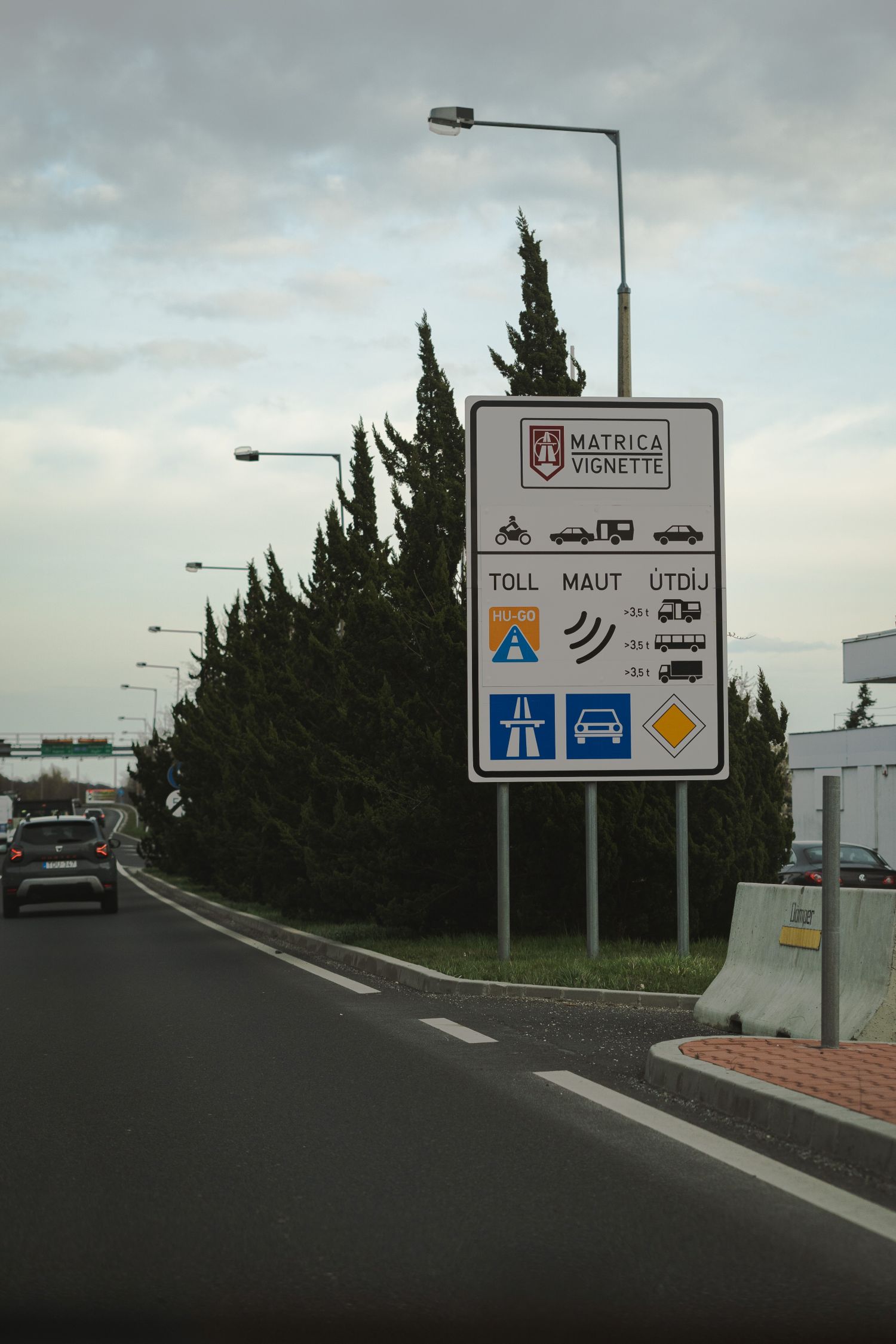
Almost every Hungarian M-road requires a valid e-Matrica, and our toll roads guide maps exactly which sections are tolled and which are free. The system is entirely electronic. Cameras read your plate automatically and check it against the database in real time, and the system will not warn you at the border if you are missing one.
Select the correct vehicle category, D1 for a car, D2 for a van or motorhome, D1M for a motorcycle, since the wrong category is one of the most common reasons drivers get fined. Our vehicle requirements and exemptions guide explains which category your vehicle falls under and which vehicles don't need an e-Matrica at all.
If caught without a valid e-Matrica, you will be charged a surcharge (pótdíj): 27,790 HUF (approximately €76) within 60 days, rising to 95,730 HUF (approximately €262) after that, effective 1 January 2026 per the official nemzetiutdij.hu rate schedule (verified July 2026). Buy your e-Matrica online before you cross the border to avoid it altogether.
| Surcharge for driving without a valid e-Matrica | Amount (from 1 January 2026) |
|---|---|
| Paid within 60 days | 27,790 HUF (approximately €76) |
| Paid after 60 days | 95,730 HUF (approximately €262) |
Toll for Vehicles Over 3.5T
Vehicles over 3.5 tonnes generally use HU-GO, an electronic distance-based toll charged per kilometre driven via an on-board unit or a pre-declared route, with rates varying by axle count, vehicle category, road type, and emissions class. One exception worth knowing: since 1 January 2026, recreational vehicles and motorhomes over 3.5 tonnes have moved out of HU-GO and into the e-Matrica system instead, under vehicle category D2. This mainly leaves trucks and buses on HU-GO, so most foreign leisure drivers, even in a larger motorhome, will need an e-Matrica rather than HU-GO registration.
Border Crossings Into Hungary
Knowing which Hungarian border crossing applies to your route is worth doing before you buy your e-Matrica:
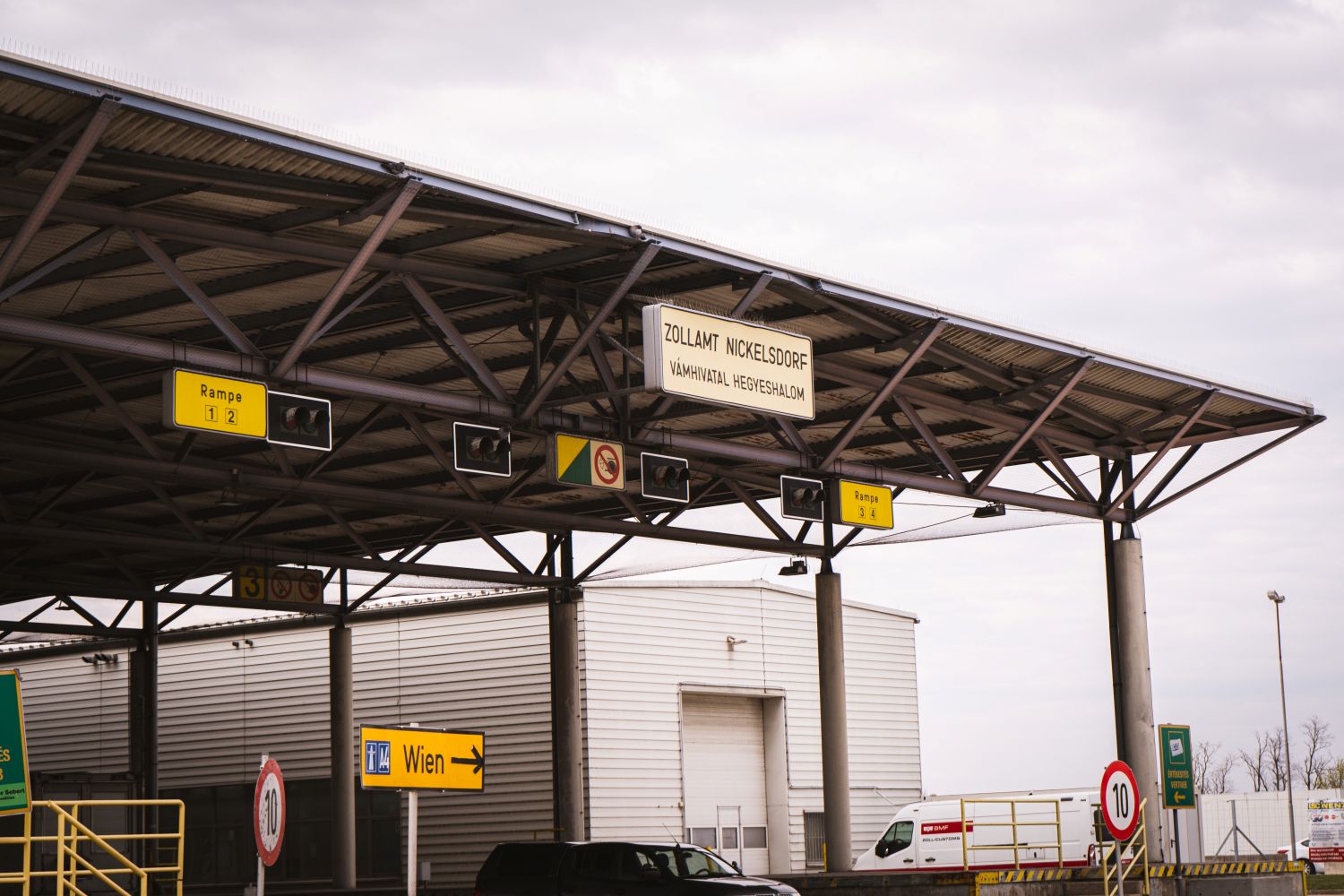
- From Austria or Germany: the M1 at Hegyeshalom, the busiest western entry point
- From Slovakia, via Bratislava: the M15 at Rajka, an open Schengen border with no checkpoint
- From Croatia: the M7 at Letenye, or the M6 further south at Ivándárda
- From Slovenia, a common route from Italy or Switzerland: the M70 at Tornyiszentmiklós
As all of these are open Schengen borders, expect no passport control under normal circumstances. VÉDA cameras do start scanning for a valid e-Matrica within a few hundred metres of the crossing though, and several, including Hegyeshalom, have no vignette sales point on the Hungarian side, so buy online before you reach it.
Hungarian Driving Culture: What Foreign Drivers Should Know
Hungarian motorways, especially the M1, have a reputation for tailgating and fast overtaking, so give yourself extra following distance. Hazard lights carry a social meaning too: a brief flash after someone lets you merge is the standard way to say thank you.
Holiday traffic around Lake Balaton and routes out of Budapest gets genuinely heavy on public holidays, May Day being a well-known example, and M-road roadworks with narrowed lanes are common. Because the tolling system has no physical barrier, it is easy to assume you have been driving free of charge, only to find out otherwise later. Buying your e-Matrica in advance removes that risk.
Seasonal Driving in Hungary
Winter (December to February) brings fog, ice and slippery surfaces. Winter tyres aren't mandatory but are strongly recommended; snow chains aren't required by law either, though sensible to carry, and limit your speed to 50 km/h if fitted. Spiked tyres are never permitted. Summer brings the opposite problem: heavy traffic around Lake Balaton, so buy your e-Matrica well ahead if travelling in June, July or August.
Renting a Car in Hungary
Most rental companies set a minimum age of 21, though some allow 17 or 18 with a young-driver surcharge, and under-25s may face one too. You need a full licence and usually a second photo ID, plus a credit card for the deposit. Not every company allows driving outside Hungary, so confirm before booking, and check whether an e-Matrica is already bundled into your rental before buying a second one. Consider excess or collision damage waiver cover separately from the base rental price too.
Driving and Parking in Budapest
Trams have priority at crossings, one-way streets are common in the inner districts, and the historic centre's narrow streets can be confusing, so keep a navigation app running even on a familiar route. Metered street parking generally runs 8am to 6pm across most zones; wheel clamps are used and painful to resolve, so avoid violations. Towing is also common, and underground or multi-storey car parks are widely available as an alternative. Park in the direction of traffic, stay 5 metres back from a crossing or intersection, and never park in a bus lane or at a bus stop. Budapest also restricts certain vehicle types on high-pollution days, so check current rules if driving an older vehicle.
Emergency Information
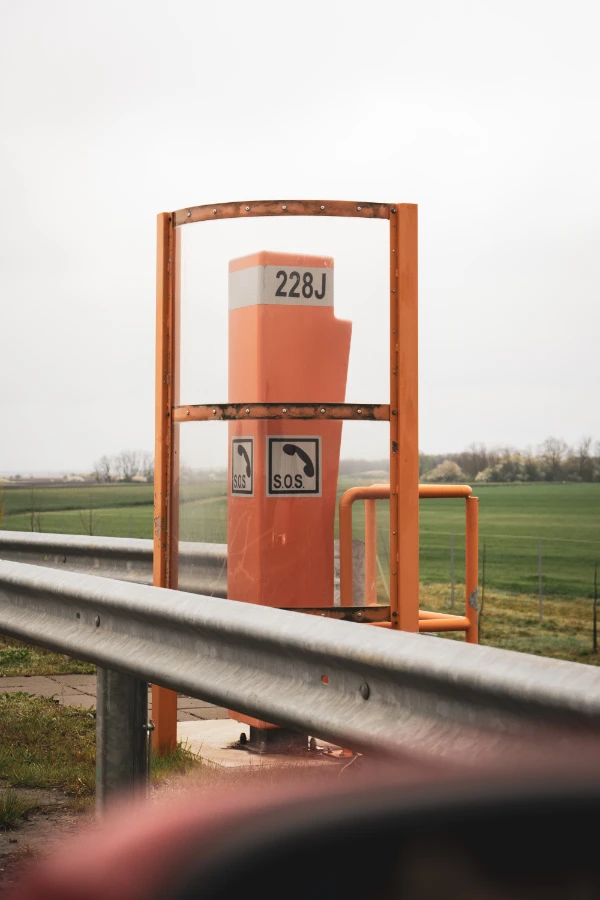
Dial 112 anywhere in Hungary for a genuine emergency; operators handle calls in English, French and other European languages. Direct lines: 107 for police, 104 for ambulance, 105 for fire. For a routine breakdown, put on your hazard lights and hi-vis vest before getting out, then call your breakdown or rental assistance number instead.
What are the dos and don'ts of driving in Hungary?
| Do | Don't |
|---|---|
| Carry your driving licence, passport or ID card, vehicle registration document and proof of insurance | Drink any alcohol before driving (the limit is 0.00%) |
| Drive on the right and overtake on the left | Turn right on a red light |
| Use dipped headlights outside built-up areas, day and night | Use full beam in built-up areas at night |
| Carry a warning triangle, first aid kit and hi-vis vest | Carry a radar detector, even switched off |
| Give way to traffic from the right at unmarked junctions | Use a handheld phone while driving |
| Use the zipper merge where a lane ends | Fit spiked tyres |
| Buy your e-Matrica before you reach the border | Pay a police fine in cash without a formal payment order |
| Use child seats for children under 3 or under 150 cm | Park in a bus lane, at a bus stop or within 5 metres of a crossing |
We are an independent registration service, not a Hungarian government site. Our guides are written and reviewed by named experts at Maut & Vignette B.V., based on our own field research in the countries we cover, and include data the official sites don't publish, such as cross-border price comparisons, validity rules, exemptions and fines. If you need help, our support team is made up of real people.
A national daily e-Matrica for a standard car costs 5,550 HUF (roughly €14) at the official 2026 rate, with 10-day, monthly and annual options also available. See our full price list for every vehicle category and duration.
FAQ
Written by: Mattijs Wijnmalen, CEO, Maut & Vignette B.V., 10 years in European road tolling.
Reviewed by: Freek Jurg, COO, Maut & Vignette B.V. Mattijs drove the M1, M5 and M7 corridors, including the Hegyeshalom border crossing, in April 2026 to research this guide.
Photography: Mattijs Wijnmalen, March 2026.
Last verified: August 2026.
Sources: Police.hu, the Hungarian National Police’s official traffic information service, and nemzetiutdij.hu, the official Hungarian e-Matrica website.
See more details about how we research and verify our content in our editorial policy.
This guide is for informational purposes only. E-Matrica prices, validity rules, and enforcement details can change. Always verify current information at nemzetiutdij.hu before travelling. Evignettehungary.com is a private reseller of Hungarian e-Matricas and is not affiliated with the Hungarian government or any official Hungarian toll authority. See our Terms of Use for the full conditions of our service.

Mattijs Wijnmalen is the CEO and co-founder of Evignettehungary.com's operator, Maut & Vignette B.V. A fine in Hungary in 2008 started his path into European tolling, and he has worked in the field since 2014. His most recent Hungary research trip was in April 2026, driving the M1, M5 and M7 corridors, including the Hegyeshalom border crossing, and he writes from direct, on-the-ground experience.